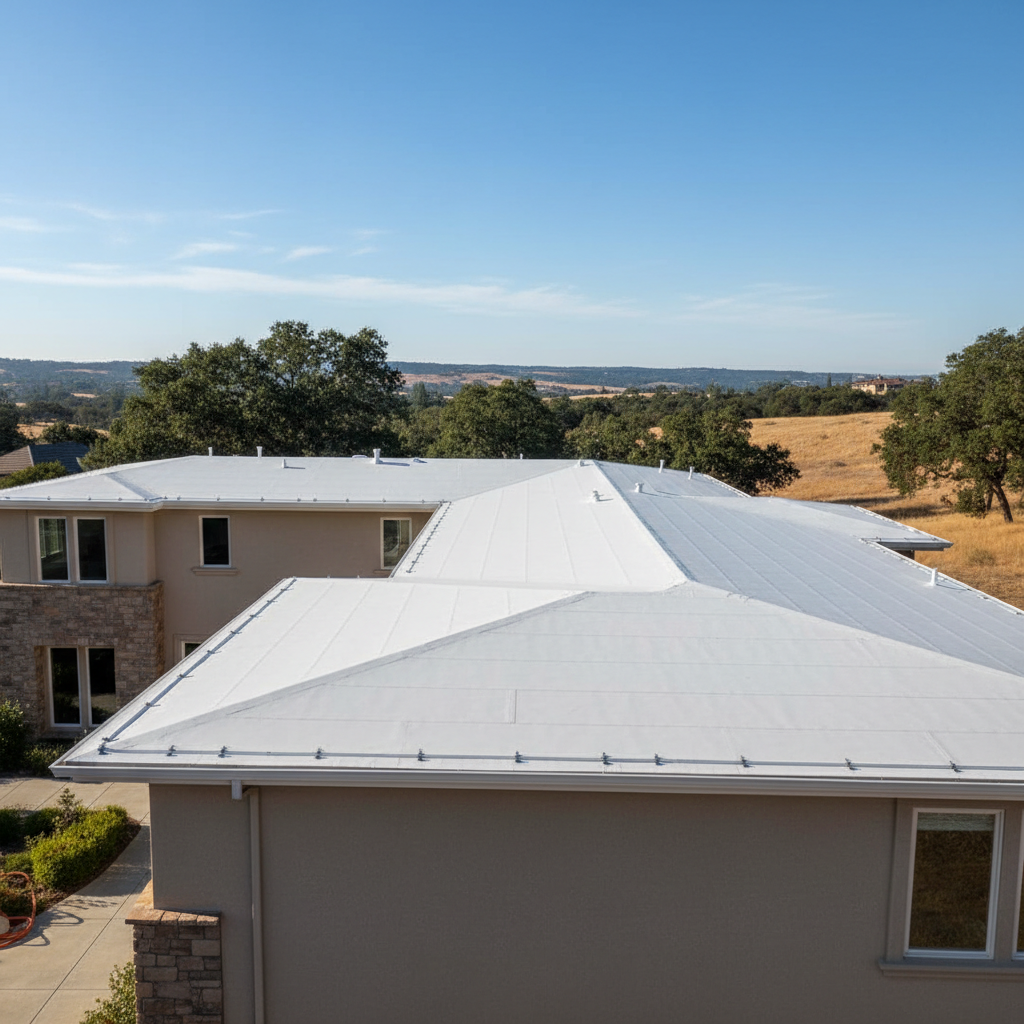
So, you've got a TPO roof on your commercial building here in El Dorado Hills, or maybe you're thinking about putting one in. Honestly, that's a smart choice for many businesses. TPO is tough, it saves energy, and it's usually pretty low-maintenance. But here's the thing: "low-maintenance" doesn't mean "no-maintenance," especially with our specific weather patterns. I want to talk about how our El Dorado Hills climate affects your TPO roof, the best times to get work done, and what you can do to keep it in tip-top shape all year long.
TPO Roofing and Our Local Weather: What You Need to Know
TPO, short for Thermoplastic Polyolefin, is a single-ply membrane roofing material. It's a popular pick for commercial buildings because it reflects sunlight, which helps keep those energy bills down, and it holds up well. But, like anything else, it has its limits and specific needs, especially when you consider our local conditions.
Here in El Dorado Hills, we definitely experience distinct seasons. Our summers stretch out, hot and dry, with temperatures often climbing into the 90s and sometimes even hitting triple digits. Then, we shift into mild, wet winters, occasionally bringing heavy rains and strong winds. We don't see much snow down in the valley, but those temperature swings? They're a big deal.
That intense summer sun, for instance. Sure, it's great for lowering your cooling costs if your TPO is reflective, but it also means constant UV exposure. Over time, that can actually degrade the material if your roof wasn't installed correctly or if you're not keeping up with maintenance. The heat also makes the TPO expand. Then, when it cools down in the evenings or during winter, it shrinks. This constant push and pull really stresses the seams and flashings. If those aren't perfectly sealed, well, you're just asking for trouble.
Our winter rains, especially when they really come down, put the waterproofing to the test. Any tiny crack or seam separation that popped up over the summer can quickly become a leak point. And those winds we get, particularly during storm fronts, can lift edges or peel back sections if the adhesive or fasteners aren't holding strong enough.
Scheduling TPO Work: Timing Really Is Everything
So, when's the best time to get work done on your TPO roof? It really depends on what you're planning, but generally, you want moderate temperatures and dry conditions. That usually means spring and fall are your sweet spots.
- Spring (March - May): This is often ideal. Temperatures are mild, usually in the 60s and 70s, and we're typically past the heaviest winter rains. The TPO material stays flexible, and adhesives cure nicely. It's a perfect time for inspections, minor repairs, or even a full replacement.
- Fall (September - November): Another excellent window. The summer heat has finally broken, and the air is dry. This allows for good adhesion and proper curing for any patches or new membrane. You definitely want to get any potential issues sorted out before those winter rains arrive.
- Summer (June - August): We can certainly do work in the summer, but it's a bit more challenging. The extreme heat can make the TPO incredibly hot to the touch, and it can affect how some adhesives and sealants perform. Plus, working on a black or white roof under that scorching sun is tough on our crews. If we're doing a full replacement, we often start early in the morning to beat the worst of the heat. For smaller repairs, it's doable, but we have to be extra careful with how we handle materials and how long things take to cure.
- Winter (December - February): Generally speaking, this is the least favorable time for major TPO work. Cold temperatures make the membrane stiffer and harder to work with, and adhesives just don't cure as effectively. On top of that, frequent rain means delays and the risk of moisture getting trapped. Emergency repairs are obviously necessary, but if you can, plan bigger projects outside of this season.
For something like a full replacement, especially on a larger commercial building in a place like the El Dorado Hills Town Center, you're looking at a multi-day job. Planning it for spring or fall minimizes weather-related risks and helps ensure the best possible outcome for the installation. What's not to like about that?
Protecting Your TPO Investment All Year Long
You've put money into a TPO roof, so let's make sure it lasts. Here's what I tell all my commercial clients:
- Regular Inspections: This isn't optional. I suggest at least twice a year – once in the spring to check for any winter damage, and again in the fall to get ready for winter. Look for anything that seems off: lifted seams, punctures, cracks, standing water, or debris.
- Keep it Clean: Our oak trees and other local plants mean leaves, twigs, and sometimes even acorns can pile up on your roof. Clear off debris regularly, especially from drains and gutters. Standing water from clogged drains is a TPO killer, no exaggeration.
- Deal with Ponding Water: If you see water pooling on your roof for more than 48 hours after a rain, that's a problem. It stresses the membrane and can lead to leaks. It might signal a structural issue or a drainage design flaw that needs fixing.
- Limit Roof Traffic: Every time someone walks on your TPO roof, there's a risk of damage. If HVAC technicians or other contractors need access, make sure they understand the roof's delicate nature and that they're not dragging tools or dropping heavy equipment. Think about putting down walk pads in areas with a lot of foot traffic.
- Professional Maintenance: Please don't try to DIY major TPO repairs. It's a specialized material, and improper repairs can void warranties or create bigger problems down the road. Have Skyline Roofing Solutions or another qualified commercial roofer handle any issues. We know what to look for and how to fix it correctly.
Your TPO roof is a crucial part of protecting your business and keeping it energy-efficient. By understanding how our El Dorado Hills climate affects it and by staying proactive with maintenance, you'll extend its lifespan and avoid those expensive surprises. If you have any questions or need an inspection, don't hesitate to give us a call.